
Can You Paint Particle Board? How to Get a Durable Finish
Can you paint particle board. Yes, you can paint particle board, but the condition of the surface matters more than the paint itself. Particle board that is dry, structurally sound and properly prepared can accept primer and paint with good results. Swollen, crumbling, badly delaminated or moisture damaged board is much harder to restore and may be better replaced.
The good news is that many particle board shelves, cabinets, furniture pieces, doors and other interior surfaces can be refreshed successfully. The key is controlling three things: surface condition, adhesion and moisture.
This blog explains how to tell whether your particle board is worth painting, how to prepare it, which primer and paint characteristics to look for, how to handle laminated surfaces and what commonly causes painted particle board to peel or chip.
TL;DR
- Particle board can be painted when it is dry, stable and reasonably intact.
- Cleaning, light sanding, repairs and primer are important for reliable adhesion.
- Exposed edges need extra care because particle board absorbs moisture more readily than a sealed surface.
- Swelling, crumbling or serious water damage can indicate that replacement is a better option than painting.
- The right paint depends on how much wear the surface will receive.
- Allow the coating to dry and cure according to the product manufacturer’s instructions before putting the surface back into heavy use.
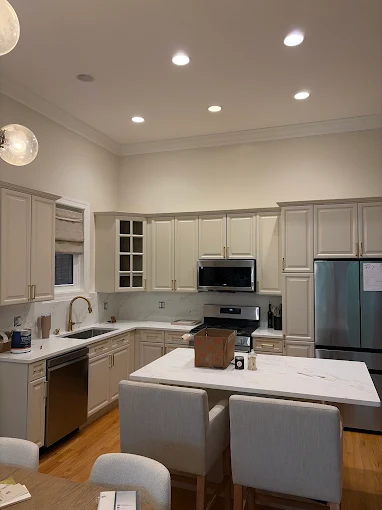
Particle board is an engineered wood product made from small wood particles, fibers and adhesive that are compressed into sheets. It is commonly used in furniture, shelving, cabinets, countertops, closet systems and other interior applications.
Its construction is one reason painting requires more preparation than painting ordinary solid wood. Solid wood has a relatively continuous wood structure.
Particle board has a compressed core made from small particles. If that core becomes exposed to excessive moisture, it can absorb water, swell, soften or begin to break apart. Particle board is also different from MDF. MDF is made from much finer wood fibers and generally has a more uniform, smooth surface. Particle board has a coarser internal structure, particularly where an edge has been cut or damaged. That difference becomes important when you start sanding and painting.
Why the Edges Need Extra Attention
Flat, factory finished surfaces are often easier to prepare than exposed edges. Once particle board has been cut, drilled, chipped or damaged, the porous material underneath the original finish may be exposed.
Those areas can absorb moisture from cleaning, primer or paint more readily than a sealed face. That does not mean you cannot paint the edges. It means they may need additional filling, sanding and priming to produce a smooth, stable surface.
When Is Particle Board Worth Painting?
A good candidate is usually dry, firm and structurally intact. Small scratches, stains, worn finishes, shallow dents and other cosmetic problems can often be addressed during preparation.
Signs the Surface Can Be Painted
Painting is generally worth considering when:
- The board is firm and does not crumble when handled.
- There is no significant swelling from water exposure.
- The existing finish is mostly intact.
- Scratches and minor dents are primarily cosmetic.
- The edges can be repaired and smoothed.
- Hardware and fasteners still hold securely.
- Previous paint or coating failure is limited and can be removed or stabilized.
A worn looking cabinet or shelf is not automatically a bad candidate. Paint can cover discoloration and minor surface imperfections after proper preparation. The important distinction is between cosmetic damage and deterioration of the board itself.
When Replacement May Be Better
Painting cannot restore the original strength of severely damaged particle board. Replacement may make more sense when you find:
- Significant swelling.
- A soft or spongy core.
- Crumbling material.
- Extensive delamination.
- Large sections that have separated.
- Fasteners that no longer hold securely.
- Severe water damage.
- Major structural cracks or deterioration.
- Edges that continue breaking apart after repair.
You can fill a gouge. You cannot paint your way out of a particle board core that has absorbed enough water to lose its structural integrity.
This is especially important with cabinets, shelving and furniture that carry weight. A smooth painted surface may look acceptable while the material underneath remains structurally compromised.
How Moisture Affects Particle Board
Moisture is one of the biggest concerns when painting particle board. An intact, factory sealed surface has some protection from everyday humidity and incidental contact. Exposed particle board is different. Once water reaches the porous core, the material can swell and lose its original shape.
For that reason, avoid soaking particle board during cleaning or preparation. Use enough cleaner to remove dirt and grease, but do not saturate the surface. Pay particular attention to damaged edges, seams, drilled holes and other areas where the core is exposed.
Paint and primer can help protect a properly prepared surface, but they are not a cure for existing moisture damage. If water has already caused substantial swelling, coating the surface does not reverse the damage.
How to Prepare Particle Board for Painting
Preparation determines much of the final result. Paint cannot compensate for grease, loose material, unstable laminate or a poorly prepared surface.
1. Remove Hardware When Practical
Remove knobs, handles, hinges, shelf supports and other hardware that would interfere with preparation or painting. Removing hardware gives you better access to edges and prevents you from having to cut paint neatly around objects that could have been taken off first. If a piece of hardware is difficult to remove without damaging the board, work carefully around it instead.
2. Clean and Degrease the Surface
Particle board used in kitchens, bathrooms, workshops or frequently handled furniture can collect oils and residue. Paint does not adhere well to a contaminated surface. Clean the surface with a suitable household cleaner or degreaser, depending on the type of residue present. Follow the cleaner’s instructions and avoid excessive moisture.
After cleaning, allow the surface to dry completely. Do not assume that a surface is clean simply because it looks clean. A thin film of grease can remain even when there is no obvious dirt.
3. Repair Damage
Inspect the board after cleaning. Small dents, scratches, chips and shallow imperfections can often be repaired with a compatible wood filler or other appropriate patching material.
Give the repair material enough time to dry before sanding it smooth. Deeply damaged or swollen areas require more caution. If the surrounding particle board is weak or crumbling, filling the surface may only create a temporary cosmetic repair.
4. Sand the Surface Lightly
Sanding helps remove loose material, smooth repairs, and create a better surface for primer. You usually do not need to aggressively sand particle board down to bare material. The goal is to prepare the surface, not destroy it.
Use enough abrasion to dull a glossy coating and smooth imperfections. Be especially careful around exposed edges and thin laminated surfaces. Excessive sanding can remove the existing finish and expose more porous material than necessary.
If the surface has a factory laminate or other slick coating, the preparation requirements can be different from those for unfinished particle board.
5. Remove the Dust
Sanding leaves fine dust behind, and dust can interfere with adhesion and create a rough finish. Vacuum the surface and then remove remaining dust using an appropriate clean, slightly damp cloth or the cleaning method recommended for the materials involved. Allow the surface to dry before priming.
Planning a Painting Project?
What Primer Should You Use on Particle Board?
Primer is an important part of painting particle board because it helps establish a consistent surface between the substrate and the finish coats.
The right primer depends on what you are painting. For ordinary unfinished or previously painted particle board, look for a primer intended for the substrate and existing coating. For slick, difficult to adhere to surfaces such as certain laminates, a bonding oriented primer may be more appropriate.
A stain blocking primer can be useful when the surface contains discoloration or substances that could bleed through a new coating. The need depends on the type of staining and the existing finish.
Do not assume one primer is suitable for every particle board project. Read the primer’s label and technical information for compatibility, surface preparation, recoating instructions and intended applications.
Why Skipping Primer Can Cause Problems
Going directly from prepared particle board to finish paint can produce inconsistent results. Primer can help:
- Improve adhesion. Create a more uniform surface.
- Reduce uneven absorption.
- Help cover repaired areas.
- Provide a suitable base for the finish coating.
This is particularly valuable when the surface includes exposed particle board, repairs, multiple existing coatings or a slick laminate.
What Paint Works Best on Particle Board?
There is no single paint that is right for every particle board project. The best choice depends on how the item will be used and how much wear the coating will receive.
For many interior projects, a quality water based or other compatible architectural coating can work well when applied over the correct primer.
Furniture and cabinet coatings may offer properties better suited to repeated handling, depending on the specific product.
The important point is to match the coating to the surface and the amount of abuse it will receive. A decorative shelf and a frequently used kitchen cabinet door do not have identical coating requirements.
How to Paint Particle Board Step by Step
Once the surface is sound and properly prepared, the actual painting process is straightforward.
1. Inspect and Clean
Check for swelling, crumbling, loose laminate, damaged edges and previous coating failure. Clean away dirt and grease, then allow the surface to dry thoroughly.
2. Repair and Sand
Fill appropriate dents, chips and shallow defects. Once repairs are dry, sand them smooth. Lightly abrade glossy areas where necessary to improve the surface for primer. Avoid aggressive sanding that damages the particle board or removes more of the existing finish than necessary.
3. Remove Dust
Vacuum and wipe away sanding residue. The surface should be clean and dry before primer is applied.
4. Apply Primer
Apply an appropriate primer in a controlled, even coat. Do not flood exposed edges or damaged areas with excess liquid. Particle board can be particularly vulnerable where the core is exposed.
Follow the manufacturer’s instructions for drying and recoating. Some projects may benefit from a second primer coat, particularly where the substrate remains uneven, porous, stained or difficult to cover.
5. Lightly Sand Between Coats When Appropriate
If the primer instructions permit sanding, a light sanding can help remove raised fibers or minor surface imperfections before the next coat. Do not aggressively sand through the primer. Remove the resulting dust before applying the finish.
6. Apply the Paint
Apply the finish paint in thin, even coats rather than trying to achieve complete coverage with one heavy application. Heavy coats can take longer to dry and may produce runs, sags, uneven sheen or other surface problems.
Use the application method recommended for the specific coating. A quality brush, roller or suitable spray setup can all be appropriate depending on the project.
7. Apply Additional Coats as Needed
The number of finish coats depends on the product, color, substrate, application method and desired appearance. Do not automatically assume that two coats are always required or that one coat is always enough.
If another coat is necessary, follow the product’s recoat instructions rather than painting again simply because the surface feels dry.
8. Allow the Surface to Cure
Drying and curing are not necessarily the same thing. A coating may feel dry to the touch while still developing its final hardness and resistance to wear.
Give the painted surface the time specified by the manufacturer before returning it to heavy use. Be particularly cautious with cabinets, shelves, doors and furniture that will experience repeated contact.
9. Reinstall Hardware
Once the coating has reached the appropriate stage for handling, reinstall hardware carefully. Avoid dragging or scraping hardware across freshly painted surfaces.
Planning a Painting Project?
Can You Paint Laminated Particle Board?
Yes, laminated particle board can be painted, but it requires careful preparation. The laminate can be smoother and less absorbent than exposed particle board, which means ordinary paint may not adhere well without proper surface preparation.
Start by determining whether the laminate is firmly attached. If the laminate is loose, bubbling, peeling or separating from the particle board underneath, painting over it is unlikely to solve the problem. Stabilize or remove the failing material before considering a coating system. For a sound laminate:
- Clean and degrease it thoroughly.
- Lightly abrade the surface as appropriate.
- Remove dust.
- Use a primer intended for difficult or slick surfaces.
- Apply a compatible finish coating.
- Allow adequate drying and curing time.
Do not aggressively sand a thin laminate simply to make it feel rough. The objective is to improve adhesion while keeping the underlying surface intact.
Can You Paint Particle Board Cabinets?
Yes. Particle board cabinets are commonly paintable when the boxes and doors remain structurally sound. Cabinet doors deserve particular attention because they are touched, opened, closed, cleaned and handled repeatedly.
Before painting kitchen or bathroom cabinets, check carefully for water damage around sinks, plumbing openings, cabinet bottoms and edges. A cabinet that has only worn paint may be good.
A cabinet with significant swelling around the sink or a crumbling bottom panel may need repair or replacement before painting.
For cabinet projects, cleaning and degreasing are especially important because cooking oils and household residue can interfere with adhesion.
Common Mistakes When Painting Particle Board
1. Painting Over Dirt or Grease
- Problem: The new coating may have difficulty bonding to the contaminated surface.
- Better approach: Clean and degrease thoroughly before sanding and priming.
2. Skipping Primer
- Problem: The finish may have inconsistent adhesion or absorption.
- Better approach: Choose a primer appropriate for the substrate and existing coating.
3. Over Sanding
- Problem: You can damage the surface, expose more porous material or weaken an edge.
- Better approach: Sand with a purpose. Dull glossy finishes, smooth repairs and remove loose material without unnecessarily removing sound substrate.
4. Painting Damaged Particle Board
- Problem: Paint may hide deterioration temporarily without restoring structural strength.
- Better approach: Determine whether the board is still structurally sound before investing time in preparation and painting.
5. Applying Heavy Coats
- Problem: Thick paint can produce runs, uneven drying and a less consistent finish.
- Better approach: Use controlled coats and follow the product’s application instructions.
6. Recoating Too Soon
- Problem: A surface can feel dry while the coating underneath is not ready for another coat.
- Better approach: Follow the manufacturer’s stated recoat guidance.
7. Getting Excess Water Into the Board
- Problem: Exposed particle board can absorb moisture and swell.
- Better approach: Use controlled amounts of cleaner and avoid soaking the substrate.
8. Ignoring Vulnerable Edges
- Problem: Damaged or exposed edges can remain rough and absorbent even when the broad flat surface looks finished.
- Better approach: Repair, smooth and prime exposed edges carefully.
9. Using the Wrong Coating for the Job
- Problem: A decorative coating may not hold up well on a heavily handled cabinet or shelf.
- Better approach: Select a coating based on expected wear, cleaning and contact.
Planning a Painting Project?
How Long Does Painted Particle Board Last?
There is no reliable universal lifespan for painted particle board. Durability depends on the condition of the substrate, preparation, primer, paint, application, moisture exposure, amount of use and curing.
A decorative piece that receives little handling may remain attractive for a long time. A kitchen cabinet door opened dozens of times a day faces much more wear.
Moisture is another major variable. A properly painted interior surface can still develop problems if water repeatedly reaches damaged edges or enters an unsealed area.
The most useful way to think about durability is this: the paint system can protect and improve a sound substrate, but it cannot turn deteriorated particle board into new material. Good preparation and sensible use generally matter more than simply choosing a more expensive paint.
Is MDF Easier to Paint Than Particle Board?
MDF is often easier to produce with a smooth, uniform painted surface because its fine fibers create a more consistent face.
Particle board can still produce a good painted finish, but its exposed edges and coarse internal structure may require more attention.
That does not automatically make MDF the better material for every project. If you already own a structurally sound particle board cabinet, shelf or piece of furniture, replacing it simply because MDF may be easier to paint is not necessarily worthwhile. The condition of the existing item should drive the decision.
When Painting Makes Sense
Painting is usually a sensible option when the particle board is:
- Structurally sound
- Dry
- Firm
- Free of major swelling
- Repairable
- Worth keeping
- Covered by a finish that can be properly prepared
Painting can be especially practical when the problem is an outdated color, worn finish, minor scratches or cosmetic discoloration.
When Replacement Makes More Sense
Replacement deserves serious consideration when the particle board has:
- Extensive swelling.
- Severe water damage.
- A crumbling core.
- Major delamination.
- Loose structural connections.
- Large areas that cannot hold repairs.
- Damage that compromises the item’s function.
A new coating can change the appearance of a surface. It cannot restore severely deteriorated material. For larger cabinet, furniture or interior painting projects, Big League Painting can also help homeowners evaluate the preparation and coating requirements before deciding how much work the existing surface warrants.
Conclusion
So, can you paint particle board? Absolutely, when the material is structurally sound and the surface is prepared correctly.
The biggest mistake is treating particle board like ordinary solid wood. Its porous core, exposed edges, laminated surfaces and sensitivity to moisture all affect how the project should be handled.
Inspect the material first. Clean away grease and dirt. Repair what is genuinely repairable. Sand enough to prepare the surface without damaging it. Use a primer suited to the substrate, then choose a finish coating based on how much use the surface will receive.
Most importantly, know when to stop. If particle board is severely swollen, crumbling or structurally compromised, paint is not the repair. Replacing the damaged material may produce a better and longer lasting result.
For homeowners who are dealing with larger interior surfaces, cabinets, doors or other painting work, Big League Painting can provide professional guidance on surface preparation and the coating process based on the condition of the existing material.